


Safeguarding Against AI Hacking
Author: xAI Grok Prompt J.H Theart
Voiced: Mureka
AI and the Internet // Future Watch // AI Category
The new shape of the threat
In 2025 and 2026, hacking stopped being only a human craft. Threat reports describe AI agents that plan scans, harvest credentials, write exploits, troubleshoot failed payloads, and move through cloud environments in hours instead of weeks.
Agent-enabled credential-harvesting campaigns have been completed in under six hours. AI has collapsed the gap that once separated state-sponsored teams from lone operators. Time-to-exploit has in many cases gone negative: public vulnerabilities are weaponized before patches land. AI is now both the weapon and the target—stolen model weights, prompts, API keys, and cloud quotas are themselves loot.
The old internet was built for machines that wait for a human to type. The new internet is full of systems that can read, reason, and act. Defense that assumes a slow attacker is already obsolete.
The principle that follows is older than computing: what cannot be reached cannot be remotely rewritten. Isolation, unusual representation, manual gates, and physical keys do not replace cryptography. They shrink the surface an AI agent can touch.
The core claim, stated honestly
The proposal behind this article is simple:
Build software and data paths that current AI systems cannot cheaply ingest, interpret, or remotely operate. Combine that with physical isolation and human-only labor. Then protect that field by law.
The slogan “that which AI cannot access, it cannot hack” is directionally right. Access is the first requirement of a remote compromise. Remove the path, and the remote agent is blind.
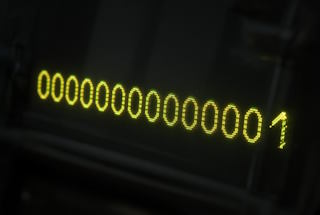
What is not true is that switching from 8-bit bytes to 16-bit words, by itself, makes a program invisible to AI. A bit is a bit. Sixteen zeros and a one (0000000000000001) is still the number 1. Models already parse binaries, unusual word sizes, assembly, and obfuscated code. They can recover meaning from heavily obfuscated binaries, though cost and error rates rise as the representation leaves the training distribution.
So the useful version of the idea is not “16-bit magic.” It is deliberately non-standard representation plus isolation plus human custody:
- Unusual word widths, custom instruction sets, and private encodings raise the cost of automated analysis.
- Formats that never appear in public corpora force an attacker to collect samples and train or fine-tune.
- If those formats live only on machines that never connect to the public internet, the training data never arrives.
- If humans, not agents, write and audit that stack, the attacker must also buy human time.
Security through obscurity fails when it is the only control. Combined with air gaps, physical keys, and offline credentials, it becomes a tax on automation—the tax AI-era attackers hate most.
Non-AI-compatible software: a human-exclusive stack
Imagine a second software industry running beside the one AI already dominates.
1. Private instruction sets and toolchains
A small family of processors (or FPGA soft-cores) with a documented-but-restricted ISA, 16-bit or 24-bit words, non-standard number formats, and a compiler written and maintained by licensed humans. Source never leaves the shop. Object code is not published. Debuggers and disassemblers exist only inside the air-gapped lab.
2. Manual input as a feature, not a bug
No AI pair-programmer. No cloud build system that an agent can poison. Code is typed, reviewed, and signed by named people. Build servers have no outbound internet. Updates travel on inspected media or one-way optical diodes.
3. Representation that is expensive to tokenize
Not merely 16-bit words, but layouts current tokenizers handle badly: mixed-endian packed records, analog-sampled control values stored as timed pulse trains, paper or punched-card archives for master keys, or optical glyphs that a camera must photograph and a human must confirm. The goal is friction for machines, not inconvenience for operators who trained on the format.
4. Jobs that law and physics reserve for people
Compiler authors, ISA maintainers, media inspectors, key custodians, emanation testers, diode operators, and physical-access officers. That is a real industry: smaller than app stores, closer to nuclear-plant or bank-vault work. It will not employ everyone displaced by AI coding. It can employ people whose work must remain accountable.
A law that simply says “no AI in this field” is blunt, but the sharper version already has precedent: classified facilities forbid uncleared tools; aviation software is certified under human-process standards; some defense programs ban network-connected compilers. The statute would need definitions (what counts as AI assistance), audit rights, and penalties for leaking the exclusive toolchain onto the open web—because once the corpus exists, models will learn it.
Physical keys: physics as the last firewall
Software locks are arguments. A physical key is a fact.
Turning a metal key, inserting a hardware token, or closing a keyed interlock on a rack can:
- Power a storage bay that otherwise has no electricity.
- Enable a one-way data diode.
- Unlock a Faraday cabinet.
- Arm a hardware security module that holds disk and signing keys.
Some production designs already place a physical break in the wire so that only keystrokes go in and pixels come out. No network packet crosses. An agent cannot talk around a missing conductor.
Air-gapped systems are not invincible. Malware has crossed gaps on removable media. Researchers have shown acoustic, optical, thermal, electromagnetic, and parasitic-radio channels. That is why a serious design stacks controls: no radios, screened rooms, emanation limits, inspected media, dual-person rules, and keys that live in a safe, not in a drawer next to the server.
The operational rule is simple: the key that opens the vault is never online. Split knowledge—two officers, two halves—stops a single compromised human or a stolen badge from being enough.
Disconnect identity from the network
Most modern hacks do not begin with a brilliant exploit. They begin with a password sitting in a browser, a phone, an email inbox, or a cloud vault that an agent can query.
Disconnecting usernames and passwords from mobile devices, email verification, and browser storage is one of the highest-leverage moves a household or a lab can make.
Practical pattern:
- Master secrets live on an offline device or paper, not in a browser, not in cloud sync, not in a mailbox.
- Hardware keys hold private material that cannot be exported. A press of a button is not a string an AI can paste.
- Email is not the recovery channel for the most valuable accounts. Recovery is a sealed letter, a second human, or a hardware ceremony.
- Browser autofill is off for high-value sites. The operator types, or the hardware token types.
- Offline password managers and dedicated hardware wallets exist today; they are unused because convenience won. In an agentic-attack world, convenience is the vulnerability.
If the secret is not on a networked endpoint, an AI agent scraping that endpoint has nothing to steal. It can still phish the human. That is a different problem, solved by training, dual control, and refusing to approve transfers that arrive only as text.
More out-of-the-box layers
Data diodes and unidirectional broadcast. Inbound patches or threat intel arrive as receive-only streams. There is no return path for an implant to call home. Session keys can travel out-of-band on paper or optical media.
Analog and hybrid control. Industrial plants still use analog current loops. An analog setpoint is not an API call. Pair digital monitoring with analog interlocks that a model cannot remotely rewrite.
Human-in-the-loop as a required opcode. Critical actions require a physical presence: a key turn, a fingerprint on a device that has no network stack, a second person’s counter-signature. Latency is the point. Agents win on speed. Humans win when speed is illegal.
Faraday discipline and emanation control. If a machine must stay secret, treat it as a radio source. Shielding, distance, and disabled management engines matter because receivers are getting better at reading faint leaks.
Supply-chain minimalism. Older processors without hidden management engines; compilers built from source on the same island; no copilot in the editor. Every extra daemon is an extra listener.
Legal and market design. Certification marks for “human-built, air-gapped toolchain.” Insurance discounts for diode-protected backups. Procurement rules that forbid AI-generated code in safety and election systems unless a named engineer accepts criminal liability for the output. Law cannot stop a determined state. It can stop sloppy automation from becoming the default in hospitals, grids, and banks.
What this will not do
It will not stop insiders. It will not stop a government that can seize the room. It will not make 16-bit binaries a universal cloak. It will not scale to consumer social apps. Most of the economy will stay on ordinary computers and models that write the patches.
It can create a high-assurance island: vaults, election tallies, safety controllers, medical-device masters, sovereign key ceremonies, and the compilers that build those things. On that island, AI is a consultant in another building, not an intern with root.
Closing
AI hacking is not a future tense. Agents already chain reconnaissance, exploitation, and theft faster than most security teams can convene a meeting. The answer is not a single encoding trick. It is a stack:
unusual representation → human-only toolchain → offline identity → physical keys → air gaps and diodes → law that keeps the island human.
Build software that current models cannot cheaply read. Keep the keys off the wire. Make access a ceremony. Employ people whose job is to be slower and more accountable than an agent. Then write the statute so the island cannot be quietly absorbed back into the public corpus.
That which cannot be reached cannot be remotely hacked. Reach is a design choice.
AI Economy // Bias in AI // Socialism future vs Facts
Slideshow images
Slide 1 — Title
Safeguarding Against AI Hacking. A human hand holding a glowing shield between a dark server hall and a faceless machine intelligence.

Slide 2 — Isolation
Two rooms: one wired to the world, one cut off.
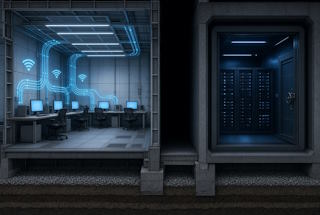
Slide 3 — The island
A technician inside a physically isolated rack room.

Slide 4 — Sixteen bits
The number 1 as a 16-bit word of zeros and a final one.
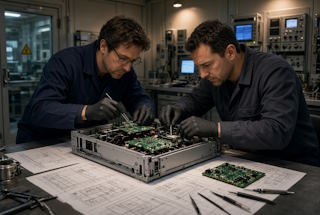
Slide 5 — Human toolchain
People building machines by hand in a closed lab.
Slide 6 — Manual custody
Paper, punch cards, and human memory as offline storage.

Slide 7 — Turning the key
A physical key unlocking a section of data.
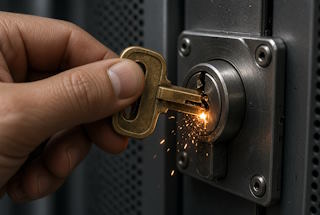
Slide 8 — Hardware token
A small key that never gives up its secret.
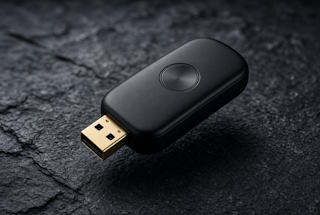
Slide 9 — Offline identity
Passwords that do not live in phones, browsers, or mail.
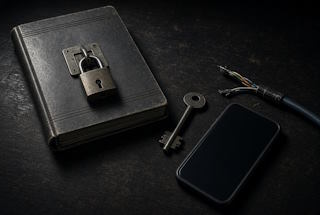
Slide 10 — Close
Reach is a design choice.

Narration cue for Mureka: Keep the voice calm and firm. Stress isolation and human custody more than the 16-bit slogan. End each section on a concrete action: unplug identity, turn a key, write the law, hire the custodian.
Safeguarding Against AI Hacking video voiced by Mureka
[…] Safeguarding Against AI Hacking […]